
Commissioning commercial demolition and strip-out
By Anadolu Mimarlık
The removal boundary
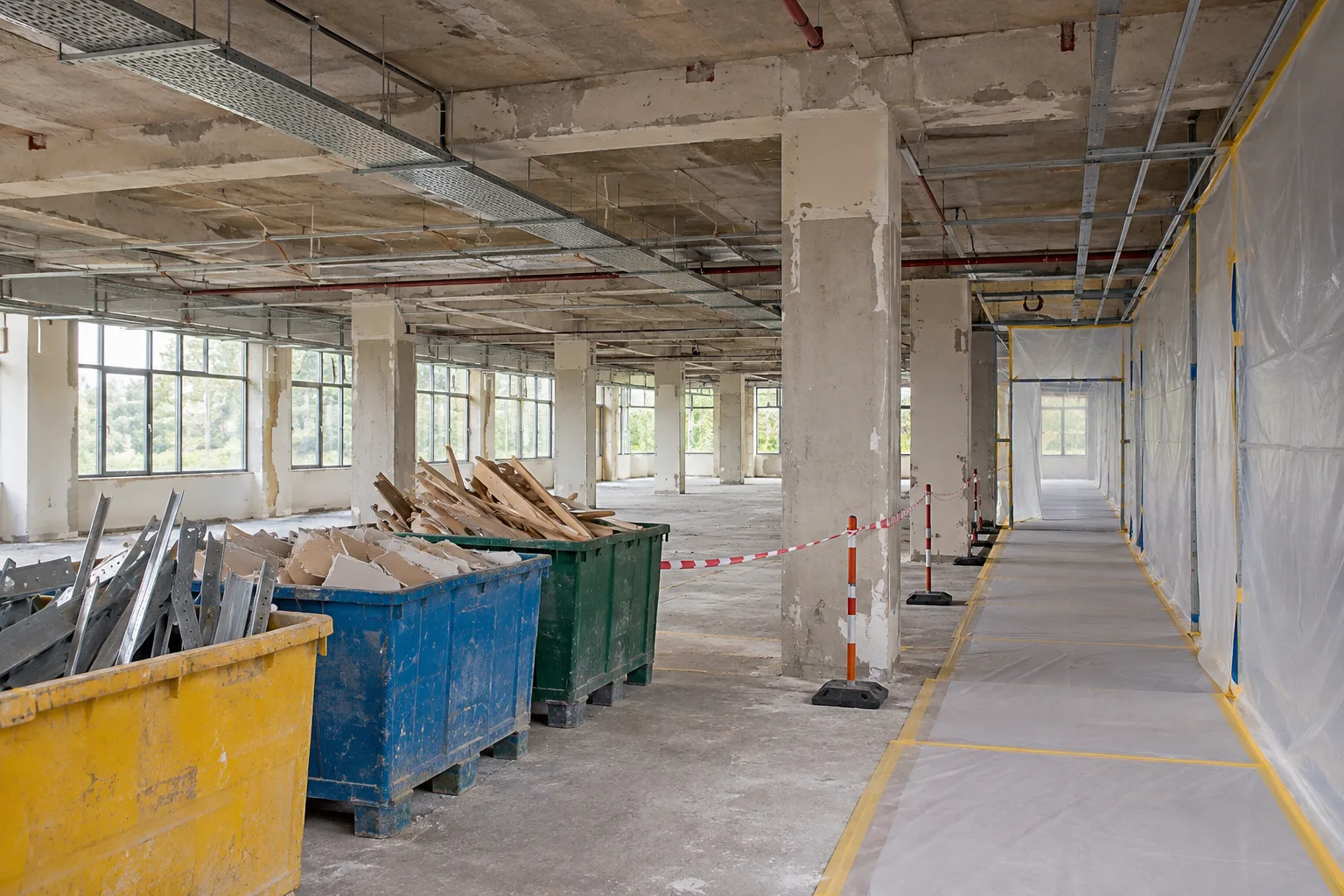
Strip-out removes agreed internal finishes, fittings or services; partial demolition removes selected building elements; full demolition removes the structure within the defined scope. None of these labels establishes that work is straightforward or non-structural. Removing a ceiling, partition or fixture may expose hazards or affect systems serving retained areas.
Issue drawings marking the removal boundary and retained elements. Describe who owns salvaged items and where they are stored. Specify the condition required for the next contractor: debris cleared, surfaces exposed for inspection, openings protected or other agreed outcomes. Avoid pricing an undefined instruction to “leave ready for refurbishment”.
“Soft strip” is a common name for an internal removal package. Define it on the drawings and schedule: which ceilings, partitions, finishes and services are removed, and which remain? The responsible team still needs to assess effects on structure, fire protection and shared systems, and specify the investigations required.
Provide information before the contract
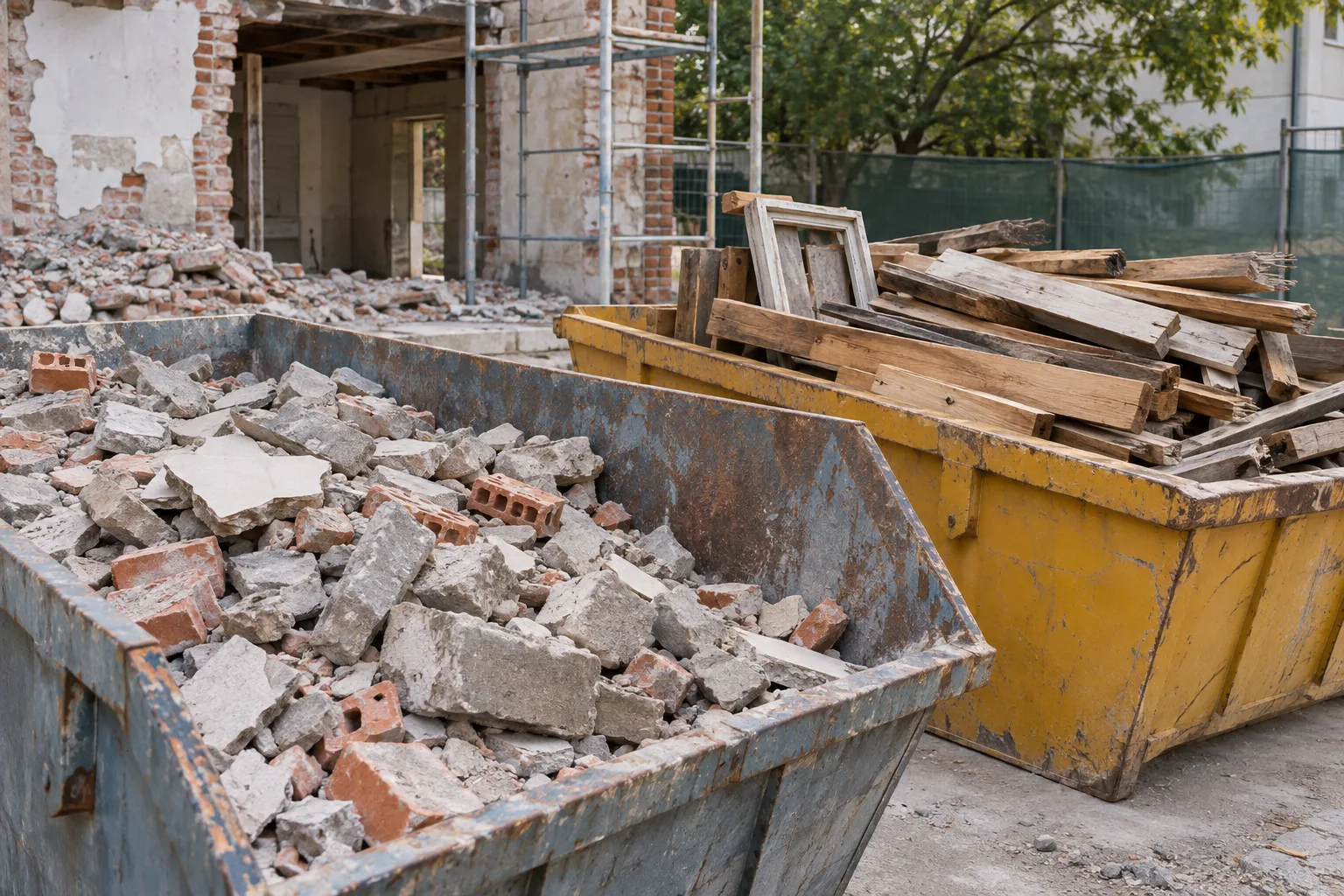
HSE’s commercial demolition guidance explains the importance of competent appointments and pre-construction information. Commission the surveys needed to establish structural, service and site conditions before a method is developed. The responsible demolition professionals must use that information to plan and check the work.
Address hazardous materials through an appropriate specialist assessment. Where asbestos is relevant, HSE explains the difference between management and refurbishment or demolition surveys. Match the investigation to the work area and intervention. Record access limitations and how unresolved areas will be dealt with before disturbance, rather than assuming that an incomplete survey means no material is present.
Identify permissions and external interfaces
For the actual site, confirm the applicable demolition notification, planning or heritage questions and any highway or neighbour interfaces. In the relevant local-authority process, notice can be needed well before the proposed start. Ask the appointed team to establish the route and its timing; do not apply a generic UK-wide checklist without checking the nation and building.
Identify utility owners, shared supplies and the evidence needed to confirm isolation. A service appearing redundant in one unit may continue to another occupier. Obtain clear responsibilities for surveys, disconnections, temporary supplies and confirmation before work proceeds. Plan hoarding, access and deliveries around neighbouring uses as well as the site itself.
In England and Wales, check whether Section 80 of the Building Act 1984 requires notice of the intended demolition to the local authority. The section contains exclusions, including a specified case of internal demolition in a building that remains occupied. Establish applicability and the authority's response before setting the start; this notification question is separate from planning, listed-building and other permissions. Use the relevant national process in Scotland or Northern Ireland.
Evaluate the proposed team and method responsibilities
Ask the contractor to explain who develops the method, who checks relevant engineering and how changing conditions are escalated. Confirm competence for the specific structure and constraints. A refurbishment strip-out team may not offer the same capability as a structural demolition specialist.
- Describe the retained building and the next stage of work.
- List surveys, information gaps and unresolved conditions.
- Identify service-isolation and temporary-works responsibilities.
- Set access, protection, waste and neighbouring-property requirements.
- Agree inspection, records and change-control points.
Plan waste and salvage as defined work
Distinguish reusable items, recyclable material and waste requiring specialist treatment. Ask how materials will be identified, separated, stored and removed, and which records the client receives. Do not assume that every item labelled for reuse remains fit for its proposed purpose after removal.
Consider an office strip-out where existing doors are to be reused. Survey their condition and dimensions, agree careful removal and storage, then assess their suitability for the new use. Include new ironmongery, adaptation and compliance review where needed. Otherwise a supposed saving can become late replacement after the new openings have been fixed.
Inspect the resulting condition
Before the next trade begins, jointly record the removal boundary and retained condition, including damage, protected openings and outstanding tasks. Pass new information to the next designers and contractors. Where removal exposes an element that could not previously be assessed, obtain the further investigation needed for its proposed alteration.
Frequently asked questions
- Can a contractor start while surveys are still incomplete?
- The responsible team must assess the missing information before any affected work proceeds. Set the required investigations and restrictions explicitly, especially where materials, structure or live services remain unknown.
- Is internal strip-out always non-structural?
- No. The scope may affect structure, fire protection or shared services, and concealed conditions may be unknown. Define and assess the intervention before categorising the work.
- What should demolition handover include?
- Record the completed removal boundary, retained condition, outstanding issues, relevant inspection evidence, service information and agreed waste or salvage records.
Related articles
Related services
Sources
Let's talk about your next project.
We are with you from first idea to handover.